Quick answer: Yes — when the system is designed and treated properly, harvested rainwater is safe, clean drinking water. In fact, Texas actively encourages rainwater harvesting, and thousands of Hill Country families drink it every day. The key word is treated: rain falls clean, but a good system is what keeps it that way from your roof to your tap.
Rainwater starts out remarkably pure. Before it ever hits your roof, rain is some of the cleanest water there is — essentially nature's own distillation. It has no chlorine, no fluoride, and none of the dissolved minerals that make well water "hard." That's why rainwater feels softer in the shower and is gentler on pipes, water heaters, and appliances.The contamination people worry about doesn't come from the rain. It comes from what the rain touches on the way to your tank — the roof surface, leaves and dust, the occasional bird — and from water sitting untreated in storage. Every one of those is a solved problem, and a properly built system solves all of them in layers.
How a proper system keeps it safe
We treat drinking-water systems with multiple independent barriers, so no single point has to be perfect:
A clean catchment surface. For potable systems we collect only from metal roofs or shingle roofs more than 5-7 years old, per the Texas Manual on Rainwater Harvesting. Metal is inert, sheds water cleanly, and doesn't leach the way asphalt shingle can — which is why we won't install a drinking-water system on a shingle roof.
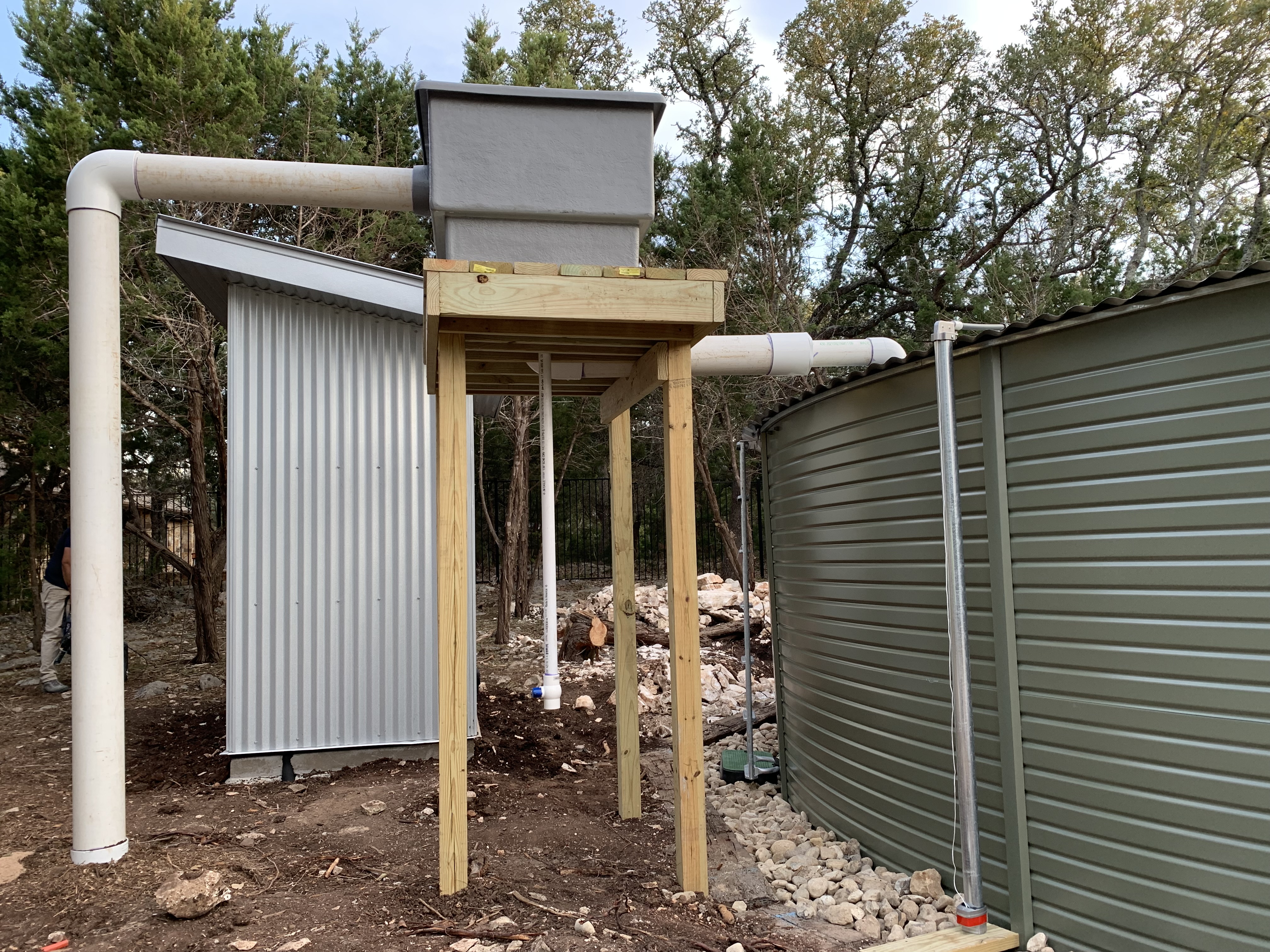
First-flush diversion. The dirtiest water is the first bit off the roof, carrying the dust and debris that settled between rains. Our Dr. Flush™ device automatically diverts that first flush away from your tank so it never gets stored.
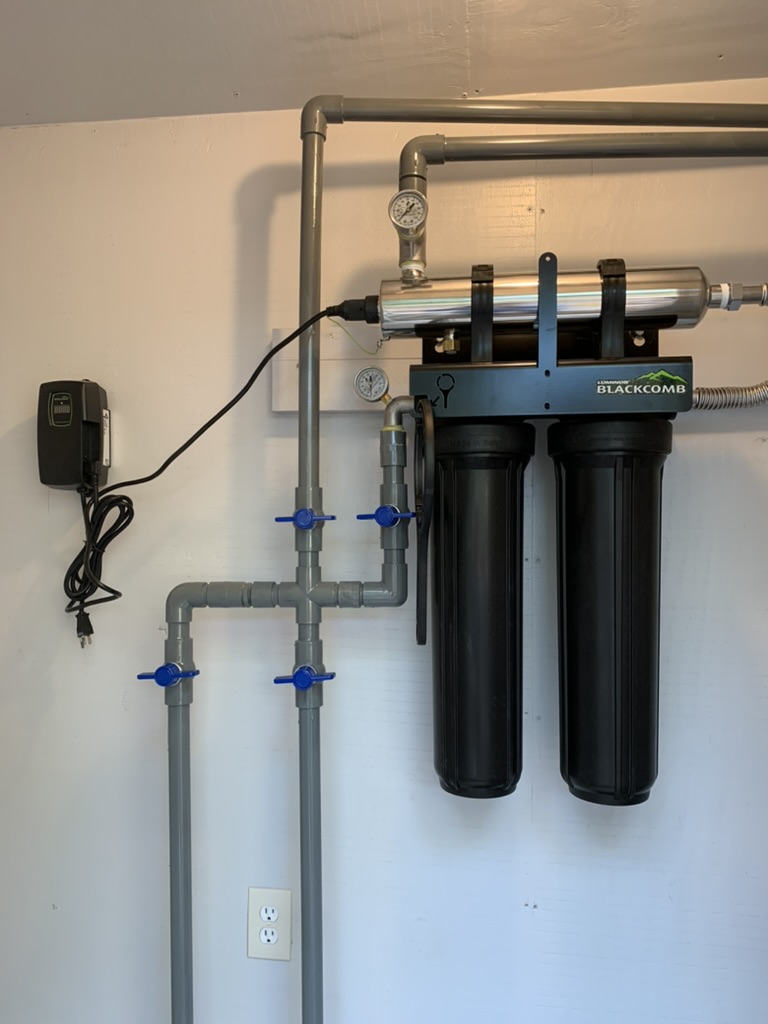
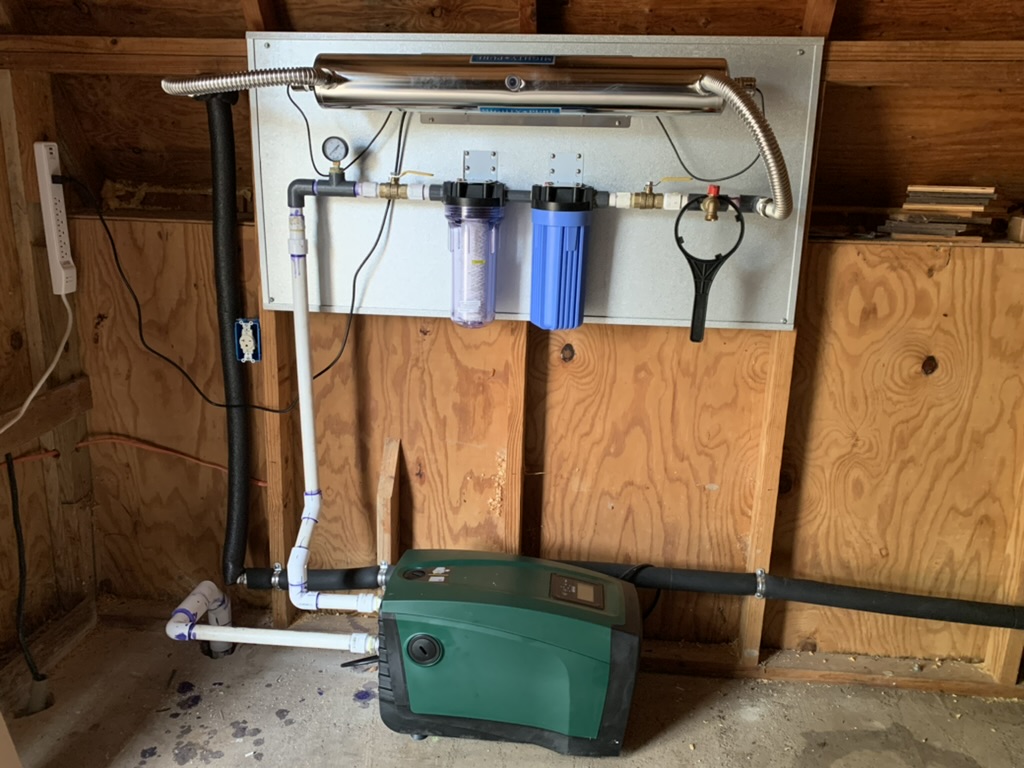
Sediment and carbon filtration. Selecto cartridges pull out fine particles and polish the water for taste and clarity before it reaches your home.
UV disinfection. An ultraviolet unit is the final barrier, neutralizing any bacteria or microorganisms so what comes out of the tap is safe to drink.
How rainwater compares to alternatives:
Against a well, rainwater sidesteps the things that plague Hill Country groundwater: hardness, high mineral content, and whatever the aquifer happens to be carrying. Against city water, you skip the chlorine and the monthly bill, and you know exactly where every drop came from. Many of our customers tell us it simply tastes better — soft, clean, and neutral.
Water education · Dripping Springs, Texas
Drill for your water, or catch it on the way down.
A well is a bet on what the Trinity Aquifer is doing under your lot. A roof is 33 inches a year, every year. Here is the honest comparison on one property — 3,000 sq ft roof, four people, potable water, twenty years of it.
52,425
Gallons a year, off the roof
30,000 gal
Upper Glen Rose · Upper Trinity
Lower Glen Rose
Hensell Sand · the producer
Cow Creek Limestone
Hammett Shale
Confining unit — water does not cross this
Sligo Formation
Hosston Sand · Lower Trinity
0 ft
300 ft
600 ft
900 ft
1,150 ft
Rainwater · no drilling
$45,000
30,000 gal, potable, installed
Upper Trinity
150–300 ft
$8K–$14K · 1–5 gpm
Middle Trinity
300–550 ft
$12K–$24K · 10–40 gpm
The dry hole
1 in 5
$10K–$20K · no water
Lower Trinity
700–1,200 ft
$35K–$75K+ · lower yield
Scroll sideways to see the whole diagram
Catch it on the way down
Rainwater
6.1¢
per gallon, 20 yrs
Zero feet of drilling
$45,000 installed
52,425 gal/yr
33 inches on a 3,000 sq ft roof is about 52,425 gallons a year — more than four people use — and a 30,000-gallon tank holds roughly seven months of that in reserve. Naturally soft, so there are no minerals to strip out and no 900-foot lift to pay for. The price is fixed before the first tank arrives.
Cost per gallon, 20 years
install + upkeep per gallon delivered
Upper Trinity
5–9¢
Middle Trinity
4.5–7¢
Lower Trinity
8–13¢
Dry hole
∞
Rainwater
6.1¢
Rainwater lands mid-pack on price — and it is the only number on this chart you know before you spend a dollar.
What is actually in the water
Parameter
Rain
Well
What it means
Total hardness
0–10
200–500+
Soft water: no scale, less soap
Dissolved solids
5–30
300–1,000+
Fewer minerals, cleaner taste
Calcium
under 5
60–180
Aquifers load water with calcium
Sulfate
1–5
30–300+
High sulfate: taste, laxative effect
Sodium
1–4
20–150
Low is better for health
Nitrate
under 1
1–10
Agricultural run-off
pH
6.0–7.0
7.2–8.3
Well water alkaline from limestone
mg/L unless noted; pH is unitless. Typical Hill Country ranges — every site varies. Rain is free of coliform at capture; storage is why every potable system we build includes filtration and UV.
1
Drought and decline
Trinity levels keep dropping as more wells go in, and recharge has to crawl down through hundreds of feet of limestone. Rain shows up with every storm.
2
Treatment you can skip
Hard groundwater usually means a softener and reverse osmosis on top of the drilling bill. Rain needs first flush, sediment, carbon and UV — that is the whole train.
3
Annual upkeep
A service plan runs $500–$1,500 a year with consumables included — against salt, RO membranes, testing, and a $3,000–$6,000 submersible every 8–12 years.
Every well pulls from the same compartmentalized rock your neighbors drink from. A rainwater house takes zero gallons out of it.
Dripping Rainwater
Rainwater systems across Hays, Blanco, Travis and Comal counties since 1998 · (512) 829-5800
Formations and depths per TWDB / USGS Hill Country Trinity mapping. Well costs are 2026 Hill Country ranges including casing, pump and treatment. Rainwater at $1.50 per gallon of storage installed plus annual service.
A drinking-water system isn't "install it and forget it." The filters and UV lamp need periodic replacement, and an annual water test confirms everything's performing. That's the entire reason we offer maintenance plans — so the barriers that keep your water safe stay in good shape without you having to track it. Handled on a schedule, a rainwater system delivers safe water for decades.
The short version:
Rainwater is safe to drink when it's collected off the right surface, the first flush is diverted, it's filtered and UV-treated, and the system is maintained. Do those things — which is exactly what we build and service — and you've got some of the best water in Texas coming straight off your own roof.
Have questions about your property or an existing system? Get in touch — we're happy to walk through what's right for your home.
.png)
.jpg)
%20(1).png)
.png)